We are at the end of the penultimate month. And this ushers in the beginning of the end — the end of 2025! For many around the world, this is a time of planning and preparation for the holiday season that lies ahead. Still for many, the believers particularly, this is the season of wonderful anticipation of Christmas.
I want us to pause for a moment, to reflect on our present standing with God. For some, this may be an uncomfortable question, which means there is no better time than “now” to ponder over our spiritual status. Our fast-paced world has succeeded in keeping us busy. Being busy and productive may not be in itself wrong; however, can we face God in good conscience at any given moment? If not, we need to step back a bit and introspect. As we go about this, let us learn to approach God by understanding His tender heart towards us.
“Come to me…” When Jesus says, “Come to me, all who labor and are heavy laden, and I will give you rest,” He is not extending a seasonal greeting. He is issuing a standing invitation. One that doesn’t require qualifications. One that doesn’t demand you clean yourself up first. One that echoes through every Advent season, down every century, into every trembling heart. The Lord who spoke these words isn’t repelled by sinners—He is drawn to them. Not because He overlooks sin, but because He heals it. Moreover, Jesus explains the purpose of his coming — “I have not come to call the righteous, but sinners to repentance.” (Luke 5:32)
In Him, shame meets compassion; guilt meets mercy and sinners become sons and daughters!
The Invitation Today
This season of Advent is not just about celebrating that Jesus once came. It’s about returning to Him again today. It’s about remembering that He invites sinners—not theoretical sinners, but real ones. People like us.
Maybe you are battling a secret sin. Maybe you are numbed by routine faith. Maybe you are found carrying regrets and you think God is tired of hearing about.
Wait and listen to His voice. Not because you have earned the right to come. Not because you promise to never fail again. But because He still welcomes sinners. Because His grace is deeper than your guilt and His rest is stronger than your weariness.
A Season for Returning Advent is for sinners. It is for the weary, the guilty, the unfaithful, the ones who have run too far or failed too often. It is for people who desperately need a Savior—and for people who don’t yet realize they do.
So if you feel unworthy, take heart: You are exactly the kind of person Jesus came for — Wide open. Nail-scarred. Full of mercy.
The Open Door Furthermore, Jesus’ gracious invitation continues into the future: “See! I stand at the door and knock. If anyone hears my voice and opens the door, I will come into him and eat with him, and he with me” (Revelation 3:20). This gives us a compelling picture of Christ’s eagerness to reach us and his willingness to fellowship with us. What a glorious privilege it is to sit and fellowship with the King of kings and Lord of lords! And so, may we lay aside our doubts, our hesitation, and come before him with child-like awe.
Let us seize God’s open offer, now!
“…whoever comes to me I will never cast out.” (John 6:37).
Family life is a beautiful gift, but it’s not without its storms. Between juggling responsibilities, resolving conflicts, and facing unexpected hardships, it’s easy to feel overwhelmed. Sometimes, these challenges can subtly—or not so subtly—pull us away from our relationship with God. The demands of parenting, a strained marriage, or financial pressures can leave us distracted, exhausted, or even questioning our faith. But the Bible offers us hope, wisdom, and practical examples to stay rooted in God, no matter the season.
Here’s how we can navigate family challenges without letting them distance us from the Lord, with lessons drawn from Scripture.
1. Recognize the Pull and Refocus on God’s Presence
Life’s pressures can make us feel like God is distant, but often it’s our focus that shifts. Take the story of Martha and Mary in Luke 10:38-42. Martha was busy serving, distracted by her many tasks, while Mary sat at Jesus’ feet, listening to Him. Martha’s frustration boiled over, and she even questioned Jesus: “Lord, don’t you care that my sister has left me to do the work by myself?” (v. 40, NIV). Jesus gently corrected her, saying, “Martha, Martha, you are worried and upset about many things, but few things are needed—or indeed only one. Mary has chosen what is better, and it will not be taken away from her” (v. 41-42)
In family life, we can become like Martha—caught up in the chaos of schedules, bills, or sibling squabbles. It’s not that our duties don’t matter; it’s that they shouldn’t eclipse our time with God. When you feel the pull, pause. Refocus. Even a short prayer or a moment of gratitude can recenter you on His presence.
2. Lean on God’s Strength, Not Your Own
Family challenges can drain us emotionally and physically, tempting us to rely solely on our own grit. But Scripture reminds us that God’s strength is available when ours runs out. Look at the example of David in 1 Samuel 30:6. His family had been taken captive by the Amalekites, and his men were ready to turn against him. The Bible says, “David was greatly distressed… But David found strength in the Lord his God.” Instead of despairing, he sought God’s guidance and went on to recover everything that was lost.
When your family faces a crisis—whether it’s a health scare, a rebellious child, or a fractured relationship—turn to God first. Philippians 4:13 declares, “I can do all this through him who gives me strength.” You don’t have to carry it alone; God’s power is bigger than any challenge.
3. Guard Against Bitterness with Forgiveness
Family life can breed hurt—arguments with a spouse, disappointment in a child, or tension with in-laws. If unchecked, resentment can creep in and harden our hearts, pushing us away from God’s love. The story of Joseph in Genesis 37-50 is a powerful example. Sold into slavery by his brothers, he had every reason to grow bitter. Yet, years later, when he faced them again, he said, “You intended to harm me, but God intended it for good” (Genesis 50:20).
Ephesians 4:31-32 urges us, “Get rid of all bitterness, rage and anger, brawling and slander, along with every form of malice. Be kind and compassionate to one another, forgiving each other, just as in Christ God forgave you.” When family strife tempts you to pull away from God, lean into forgiveness instead. It’s not easy, but it keeps your heart aligned with Him.
4. Prioritize Prayer as a Family Lifeline
When life gets hectic, prayer can feel like just another task to squeeze in. Yet, it’s our direct line to God, especially in tough times. In Acts 12, Peter was imprisoned, and his situation seemed hopeless. But the church—his spiritual family—“was earnestly praying to God for him” (Acts 12:5). God answered dramatically, sending an angel to free Peter from his chains.
In your family, make prayer a habit, not an afterthought. Whether it’s a quick prayer over breakfast or a deeper time of seeking God together during a crisis, it invites His peace and guidance. Philippians 4:6-7 promises, “Do not be anxious about anything, but in every situation, by prayer and petition, with thanksgiving, present your requests to God. And the peace of God, which transcends all understanding, will guard your hearts and your minds in Christ Jesus.”
5. Trust God’s Timing and Purpose
Sometimes family challenges—like a wayward child or a prolonged struggle—make us doubt God’s goodness or timing. The story of Abraham and Sarah in Genesis 15-21 shows us how to hold on. God promised them a son, but years passed with no answer. Sarah even laughed at the idea in her old age (Genesis 18:12). Yet God fulfilled His promise with Isaac, proving His faithfulness.
When your family feels stuck, cling to Romans 8:28: “And we know that in all things God works for the good of those who love him, who have been called according to his purpose.” Trust that God is weaving even your hardships into something redemptive.
Staying Close to God Amid the Storm
Family life will always have its challenges—messy, beautiful, and everything in between. But those struggles don’t have to pull you away from God. Like a compass in a storm, Scripture and prayer can guide you back to Him. Psalm 46:1 reminds us, “God is our refuge and strength, an ever-present help in trouble.” When the waves hit, He’s not far off—He’s right there, ready to steady you.
So, take a deep breath. Look to these biblical examples. Lean into God’s Word and presence. Your family life, with all its chaos and joy, can be a place where your faith grows stronger, not weaker.
Habakkuk 3:17-19 Though the fig tree does not bud and there are no grapes on the vines, though the olive crop fails and the fields produce no food, though there are no sheep in the pen and no cattle in the stalls, yet I will rejoice in the Lord, I will be joyful in God my Savior.
To begin with, I am no fan of the above situation. I wish the fig tree would bud, the vines would be full of grapes, and everything would be merry.
But think about it: How can we ever know if we are good at something unless it’s put to the test? How can I ever know I have true joy in the Lord unless I face a situation where I don’t have people or things around to make me happy?
God does not test us to destroy us but to lift us up and lead us toward His plans andpurposes.
God surely takes us through tough situations in life. People come and people go. We gain some, we lose some. And often, we find ourselves questioning God: Why does this need to happen in my life? God could have made everything perfect, right?
But that’s exactly how we learn to live by faith in an invisible God. The Scripture tells us that what is visible is temporary, but what is unseen is eternal. God is with us, and we must learn to live by that truth.
We need to learn to base our happiness and joy in the Lord and not on the people and things that He has blessed us with. For everything will change but God will not. Know this: He is still with us- in the prison, the pit, the lion’s den, and even before the Red Sea. Through it all, we see a loving Father who protects and provides for His children who trust in Him.
Psalms 16:11 You make known to me the path of life; you will fill me with joy in your presence, with eternal pleasures at your right hand.
It is truly His hand that sustains us, because if it weren’t for Him, I for one wouldn’t be here telling you this and surely a million others would second me. God strengthens us beyond our weaknesses into the masterpiece He has always planned for us to be.
Ephesians 2:10 For we are God’s handiwork, created in Christ Jesus to do good works, which God prepared in advance for us to do.
He is the Alpha and the Omega. We may not know what will happen even a minute from now, but God already knows the ending of our story. So, trust in Him.
Remember this: even when you can’t see anything with your eyes or hold onto anyone with your hands, by faith know for sure that God is still near you through it all. He has promised that He will never leave us nor forsake us.
Nehemiah 8:10 Do not grieve, for the joy of the Lord is your strength.”
We were all once without hope, but when we received Jesus as our Lord and Savior, He gave us His joy and peace. This cannot be taken away by the world, unless we willingly let it go.
Hold fast to the joy of the Lord. It was purchased at a great cost-the precious blood of Christ. Jesus died for our sins and rose again so that we could be redeemed from the bondage of sin and hopelessness and receive an eternal hope. Let this be the reason that we rejoice every day.
Let’s pray,
Our loving heavenly Father, we thank You for You are with us through every season of our lives. We thank You for Jesus who lives forever and intercedes on our behalf. Thank You for the joy that we have gained through Jesus and His finished work on the cross. May we always be assured of this truth and live by faith in You and not be blinded by the tests and troubles of life, rather come out of it stronger and always find joy in You. Be with us and guide us. In Jesus matchless name we pray, Amen.
Therefore, if anyone is in Christ, this person is a new creation; the old things passed away; behold, new things have come
2 Corinthians 5:17, NASB
Happy New Year beloved reader. I wish good health and prosperity to you and family!!
Wow its already 2023 and another year has passed. And in the midst of so much chaos around the world. We are finding ways to live and move on with our lives. But for all of us a new year brings new hope and desire for something bigger and better than last year.
Some of us try to retrospect what we do right and wrong in the previous year. Areas we improved or need to improve. Successes and failures. And after all that we do try to come up with new year resolutions which sometimes or always gets resolves to an end by themselves. If you understand what I mean 🙂
So, in light of that, I want to put forth that this devotional is not going to be encouraging to start coming up with new year resolutions neither it’s going to be asking us to retrospect the last year. But I do want you to ask this question?
Would believing in Jesus still make a difference in 2023?
With so much uncertainty around every area of our lives, be it family, job, finances, relationships etc. Where does Jesus stand or makes sense? What can he do? Is it even logical to believe in Jesus today? We do trust our leaders of our respective countries to make a difference. Democratic or Republic or Kingdom. Yet some problems are bigger than the human race. Think about all the natural disasters, pandemic, moral wrong doings, terrorism, deaths, forgery and wars we had or are going through. Yet some of them are getting hard to be resolved by all of our strengths combined. Don’t you think we all are working to resolve these issues for so many years now? Inventions, regulations, unions, governments, rules, militaries, weapons and still the issues are not getting resolved.
Therefore, that brings us to the question What is the real problem? The bible says the below,
If you can just ponder for some time on the origin of all the issues, we face today. It comes from the evil of our hearts. We talk so much about failures of governments, humanity, morals, military and leaders. But we fail to realize that the issues we face today are not born out of these institutions we humans created for service of mankind. But mankind itself created the issues.
Let’s see an example, why do people steal? Is it because they want to, or the lack of something. It’s hard to distinguish, isn’t it? Because it’s not always the lack. It may be other moral motives, like lust, power, greed, selfishness, laziness etc. or it could be just sheer want for something to live. But the origin of all this is the thought that originated from an idea that came to the mind of someone. And when they gave into the idea, the body performed it. We could apply this to almost every issue we face.
We human race have evolved over the years and have resolved many issues. But let’s admit we cannot change a human heart. We don’t have a cure. Thats where Jesus comes in.
Now you may ask, how can a person or spiritual entity bring a change in a human heart? How can that be possible? I love the below bible verse which says
.... Humans look at outward appearances, but the Lord looks into the heart. - 1 Samuel 16:7 GWT
How can God look into our heart? It’s pretty simple. He is the one who created us. Just like we can look deep within something we created. We know ins and out of our own inventions. God can see through what he invented. We are his priceless creations, whom he loves no, matter who we are. “For God shows no partiality” – Romans 2:11.
You know what, I can give a thousand reasons to believe Jesus. But it just takes just 1 step to know for yourself. It’s like you can hear a thousand reasons from others on how good a dish is but you can’t tell for yourself if its good until you taste it yourself. Can you take that 1 step? Like we try and see so many things in our lives before taking a decision. Can you try Jesus? Give him just 1 chance look into your heart. He can cure as he himself said … I am the LORD, who heals you. – Exodus 15:26. He is the best doctor we have for all of our issues. And he is the best bet for humanity. The only obstacle to us having to know Jesus is first to admit we need a cure and second how to know him. Thankfully for us there is open an invitation for everyone. Jesus said,
Here I am! I stand at the door and knock. If anyone hears my voice and opens the door, I will come in and eat with that person, and they with me. - Revelation 3:20
This new year, you may want to try out many things. But try out Jesus too. You will never regret. I am a testimony. Life has never been the same after I accepted Jesus. Many can testify with me. We may miss many things in our lives. Let’s try our best to not miss and chance to experience Jesus.
Once you make a decision just say this prayer
Dear Lord, I admit that I am a sinner. I have done many things that don’t please you. I have lived my life for myself only. I am sorry, and I repent. I ask you to forgive me. I believe that you died on the cross for me, to save me. Come into my life and change me.
If you have said the above prayer. Congratulations. The next step for you is to know God and his word. Grab a bible and read any Gospels to start with. You will get to know about Jesus more. If you need a bible. You can contact us and we will send it to you for free. Try to join a local church and enjoy a fellowship of co-believers just like you. If you wish, reach out to us for help, we will be happy to help and guide you to the next steps.
If you are a believer of Christ, please do share this devotional to someone who may need it, prayerfully. And if you feel there have some areas in your life which needs Jesus to help you rectify. It’s not wrong to just ask Jesus to come into your life again. It’s never too late.
Heresy and Hypocrisy are plagues that rock the foundation of Christian living and morals if not addressed properly. Both of these moral failures have brought down some of the finest men and women in Christianity today. However , if we are asked to choose between them- which one would you choose? Or would you even want to choose?
What is it meant to be heretic and hypocrite?
A hypocrite is a person who knows the truth and believes the truth, but doesn’t live by it.
A heretic changes the truth according to how he lives.
Let us look at some examples of hypocrisy and heresy in churches or Christendom today to understand it better.
Hypocrites may fornicate, murder and steal, but they would never teach that fornication, murder and stealing are good. That’s what a heretic would do.
A hypocrite may have sexual misconduct with someone else’s spouse, but he/she knows it is wrong. A heretic has sexual misconduct and says, “It is necessary for the church to be welcoming and ignorant to those who have experienced difficulties and pain in keeping their marriage bond.”
A hypocrite may experience same sex attraction and have sexual relations with another man/woman, but he/she then goes to confession and realizes that what he/she has done is wrong. A heretic says, “The church needs to be more up to date in understanding of human sexuality.”
A hypocrite never gives money to the poor, hoards all his wealth, and plots to get as rich as he/she can, but when he/she looks in the mirror and in the bank account he/she has a twinge of guilt and knows he/she is a greedy and a hypocrite. The heretic says, “God has blessed me! I can enjoy as much I want with what God has blessed me with , there is nothing wrong in it.”
The hypocrite has a chance of repentance for he/she still knows that what he/she has done is wrong. The heretic condones his sin, calls evil good and good evil and prides himself on his brave and daring decision.
The heretic challenges biblical teachings. The hypocrite is challenged by the teachings.
The hypocrite follows biblical teachings even when he fails to follow the teachings whereas the heretic never follows the biblical teaching while pretending that he does follow the teachings.
Note that we all are vulnerable and the above mentioned scenarios of heresy and hypocrisy can be committed by anyone at all levels whether its a ministry , church , a believer or individual minister in any position or authority.
“The interesting fact to note is that hypocrites are some how seen more lovable than the heretics because, if they have any self awareness at all, they know themself as a hypocrite and know that they have failed to observe the teachings in which they believe. And since, its a question of self evaluation and awareness there sins are sometimes hidden from the eyes of the public, christian community or society. But, the heretic on the other hand is an odious, rebellious and proud character–full of his own ideas and ready to re-write the faith for his own benefit. Which makes them easily noticeable. That’s why its harder to notice a hypocrite than a heretic.“
Now with all this said, whom would you support to be better? Or is it even right to make this judgement?
I believe it is not right for any of us to give a judgement. We all sometimes fight hypocrisy in our own life and it’s something we have to overcome by the Grace of God. And we have to be really grounded and humble ourselves in scriptures to make sure we are not a heretic. In my opinion both heresy and hypocrisy are severe moral failures that we all have to be aware as Christians and be on guard all our life.
So, may i conclude this article by writing that as a believer(including me) who so ever we might be or no matter how big or small position we hold in the Christian ministry, we are accountable completely and fully to the teachings of the Holy Bible. We have no other truth to teach but the truth of the Christian Faith as presented in the Bible. We must not be biased or have opinions.But our discernment must be based only on the teachings of the Bible. However, in honesty – living in this fallen world is not easy and we might fail to live up to those teachings sometimes hence, in the process become a hypocrite. But there is a hope and chance for repentance through Gods grace and the blood of the Savior Lord Jesus Christ. And everyone of us should confess, repent and pray with this hope for the hypocrisy in our own lives and hypocrisy in others.
As far as for heresy there might not be hope if its not identified as a sin and evaluated for repentance.Heretics in that case are only pushing themselves towards judgement from the Lord and God himself when he comes back and he is coming soon. A role of a non-heretic believer should be to guard themselves from heresy and point out sin with respect and gentleness whenever possible and pray for Gods salvation to come through.
But in any circumstance, we should be very careful to not become judgemental. It is not for us to pass on judgement on others. But instead love and compassionately care with support and prayer for those who are gripped by these moral issues.
In the words of Jesus,
“Do not judge, or you too will be judged.For in the same way you judge others, you will be judged, and with the measure you use, it will be measured to you.”Why do you look at the speck of sawdust in your brother’s eye and pay no attention to the plank in your own eye?How can you say to your brother, `Let me take the speck out of your eye,’ when all the time there is a plank in your own eye? You hypocrite, first take the plank out of your own eye, and then you will see clearly to remove the speck from your brother’s eye.
Ever wondered if there was a worldview that gives men and women equal worth? Well then, the Christian faith and the God of the Bible is possibly the answer you are looking for.
God created man (male and female) in His image. (Genesis 1:27) This gives equal worth to man and woman. One is no greater or lesser a creation of God than the other. Being created in the image or likeness of God does not mean that God is in human form, but rather, that humans are in the image of God in their moral, spiritual, and intellectual nature. Humans differ from all other creatures because of their rational structure. These character traits are deposited in men and women – the compassion of a father, the love of a mother, the care of an elder sister/brother, the possessiveness of a partner and so on.
But despite being made in the image of God, women often have this question bothering them- why does God let them go through pain and suffering?
Some kinds of pain are inevitable in every woman’s life. The pain of menstrual cycle, pain of childbirth, in the Indian culture the fact that women are expected to give a lumpsum amount as dowry to get married, lesser education when compared to a male in the family, paternal mindset of limiting opportunities for a girl child and the list goes on. So, as a woman it is reasonable to think of God as someone who does not understand the physical and emotional pain of a woman. However, the Bible shows a God who has a different standpoint on all these.
“God understands suffering because Jesus Himself suffered on the cross the most gruesome death for us. (Isaiah 53:4-7) And so He can empathize with those who suffer. He is not a God who does not understand the sufferings of mankind nor is He ignorant of it. (Hebrews 4:15) God does not necessarily end the suffering but gives more strength and grace to endure it so that one can come through it as a better version of oneself and in doing so reflect the image of God in their lives. Romans 5:3-4 tells us that through suffering and perseverance, character and hope is built. When a woman goes through the pain of childbirth, she develops a special bond of love despite the sufferings she endured. Even though pain was involved in the process the result is blissful and develops in the mother a sacrificial love for the child she bore. This is a glimpse of the love of God that He showed when He let His Son die for the sins of mankind. Even though we falter and fail time and again, God forgives us and continues to love us because of the pain and suffering that was involved in restoring us back to Him as His sons and daughters by the sacrifice of Jesus.”
Two instances from the bible where Jesus love and compassion towards the pain and suffering of a woman-
We see that at the cross Jesus told His disciple, John, to take care of His mother- Mary. (John 19:27) Even on the cross Jesus was mindful of the mother who bore Him. He made sure that she was taken care of in her old age. This shows the filial love of Jesus – how He cared for His aged mother, who was mostly a widow by then.
We also see how Jesus heals a woman who was suffering from bleeding for 12 years (Mathew 9:20-22). They were considered unclean in that society and any one whom they touch was also considered unclean. But Jesus honors her faith and heals her completely. No person/physical condition is unclean for Him. We see in some religions that women are not allowed to enter places of worship during their period. But Jesus does not condemn anyone as unclean. He accepts us in whatever condition we might be in. He is waiting for us to come to Him just as we are. ( Matthew 11:28-29)
There is no pain that is beyond the knowledge of God. He made us and He knows our weaknesses. So, if you think you are weak then God’s grace is sufficient. Where you lack, there His provision will be abundant. For His power is made perfect in your weakness. (2 Corinthians 12:9-10, James 4:6)
Below is a poem written by Annie Flint, who as a young girl lost her mother during the birth of her baby sister. Later they were adopted into the Flint’s family. Annie grew strong in faith and started to write poems and hymns. After school she became a teacher and during the second year of teaching, she was contracted with arthritis and it grew steadily worse until it became difficult for her to walk at all. Soon after this her adoptive parents also passed away and now left her and her frail younger sister twice orphaned. During these times she penned some of the best pieces of her work through poems and hymns that reached out to many and strengthened them. The marvelous thing is that Annie’s faith never faltered, and that she was always able to say, “Thy will be done.” . This is an example of how God can use your weakness to make you stronger and encourage many others who might go through the same phase in life as you trust in God completely.
He Giveth More Grace – Annie J. Flint
He giveth more grace when the burdens grow greater, He sendeth more strength when the labors increase; To added afflictions He addeth His mercy, To multiplied trials, His multiplied peace. When we have exhausted our store of endurance, When our strength has failed ere the day is half done, When we reach the end of our hoarded resources Our Father’s full giving is only begun. Fear not that thy need shall exceed His provision, Our God ever yearns His resources to share; Lean hard on the arm everlasting, availing; The Father both thee and thy load will upbear. His love has no limits, His grace has no measure, His power no boundary known unto men; For out of His infinite riches in Jesus He giveth, and giveth, and giveth again.
John 3:16 says that God loved the world – which includes man and woman, that He gave His Son Jesus to die for our sins so that we may be saved. God sees men and women as co-heirs with Christ. (Romans 8:17)
The Bible shows us many examples where women played important roles along with men.
Deborah – was a judge over all Israel. The three basic functions were administration, the settlement of disputes, and military leadership. The distinctive of Deborah’s work as a judge stands firmly in battle. As a woman she would not be expected to be on the battlefield. However, she did not allow cultural norms to hinder her leadership and thereby enabled others to bring victory to God’s people. The directives and results did not originate from the sharp mind of a military or civil leader. They stemmed from the Lord Himself speaking through the mouth of the prophetess. God spoke through a woman to win a battle!
Mary Magdalene – the first person to have been entrusted with the very words of Jesus after He rose again and carried this gospel message to the other disciples (John20:11-17) This is worth highlighting in a culture where women were regarded as inferior to men. Jesus chose to reveal Himself to a woman and through Her spread the message of His resurrection, which was by far the most essential message of Christianity. (1 Corinthians 1:27) If Jesus had not risen, then Christians would be the most pitied of all. (1 Corinthians 15:19) And Mary did her job well!
Phoebe – a deaconess who helped Paul and many others in their ministry. She was trusted by Paul to deliver his letter to the Romans. Phoebe was a woman of means, who, among other things, contributed financial support to Paul’s apostolate, and probably hosted the house church of in her home, as well as, providing shelter and hospitality to Paul when in the town.
Lydia – an entrepreneur who hosted Paul and his companions. She was the first convert to Christianity in Macedonia. The rabbis of that day where known to say, “It is better that the words of the Law be burned that be delivered to a woman.” The fact that Paul was willing to speak to the women of this place indicates he was not affirming to this view. Even though there was no great revival initially in Macedonia and only one woman got saved – Lydia, God used her greatly to aid Paul. She was instrumental in establishing the church at Philippi.
Priscilla – a missionary along with her husband Aquila are an example of how a couple can work together for God’s Kingdom and that it is not only men who are called for missions. God makes your availability for Him your ability to serve Him.
And so on …
Having said the above, God’s design for the roles that man and woman need to play are unique, but this does not make one inferior to the other. “For the husband is the head of the wife as Christ is the head of the church, His body, of which He is the Savior.” (Ephesians 5:23) This verse is self-explanatory if read in full. If he is the head of the wife, the Bile says that he must love and care for the wife as Christ does for the church which means he should be ready to even lay down his life for her.( Ephesians 5:23-25) “All through the Bible we see men climbing mountains to commune with God, but He always came down to meet with the women wherever they were.”– (God comes to the women – Heather Farrell). Differences between man and woman are meant to complement and complete each other so that they can together fulfil the purpose for which God has created them.
God loves you and you are the daughter of the Most High, don’t let anyone belittle your identity!
Not long ago we had a movie released here which portrayed miracles and healings as completely scripted and fake, everything was just showbiz and a means to make a fortune for some.It’s a sad reality that such tricksters and frauds do exist and try to deceive many people with their counterfeit miracles.
It is hence, also true that some people take the name of the Lord in vain for their own benefit.But, this is not something new that it should surprise us.Throughout the Bible, we see such people and Jesus warns us ahead of time against them.
Mathew 24:24 – For false messiahs and false prophets will appear and perform great signs and wonders to deceive, if possible, even the elect.
Acts 8:20 – Peter answered: “May your money perish with you, because you thought you could buy the gift of God with money!
1 John 4:1 – Dear friends, do not believe every spirit, but test the spirits to see whether they are from God, because many false prophets have gone out into the world.
2 Thessalonians 2:9 – The coming of the lawless one will be in accordance with how Satan works. He will use all sorts of displays of power through signs and wonders that serve the lie, and all the ways that wickedness deceives those who are perishing.
we see that such false teachers, sorcerers, wizards, witches and magicians were there even during that time, trying to mislead the people.God alone is Omnipotent – almighty and able to do all things beyond what any “gods” of this world can duplicate.
We need to be aware of the means by which the miracle happens and not blinded by the result. The end result does not justify the means, but the means should justify itself.
Let us be wise and discern such people and not fall into any such deception. 1John 4:1-3, James 1:5
So, having said the above, we come to some basic questions:
Are miracles for real or just hyped up stories that are hollow inside?
Are they the most important factor of the Christian faith and all that it comes down to?
Can we conclude about a local church solely based on the healings and miracles that happen there?
The answer would have to be – not really! There is much more to the church of God than just miracles. Miracles are God’s witness to His word. They do not replace the word nor do they subsume the word. Signs and wonders are not the power of God unto salvation, but they testify to salvation. The word of God is what brings salvation as stated clearly by Paul.
For I am not ashamed of the gospel, because it is the power of God that brings salvation to everyone who believes: first to the Jew, then to the Gentile.
Romans 1:16
So, if a church is all about miracles without proper teaching from the word, then something is wrong there and needs to be checked. Kathryn Kuhlman was an American evangelist known for hosting healing services. She said that the biggest miracle that she had witnessed was this – “the salvation of a soul”. When a sinner realizes the need for a savior and accepts Jesus into his life and believes that God has forgiven his sins, a miracle takes place on the inside of that person which is beyond the miracles we can witness with our naked eyes.
“What is more important? – that you see miracles and get what you want in this life or you learn the word of God and understand that there is more to life than this world and all its needs ?“
If everything you need is in this world and nothing beyond it, then what do you really gain? Mark 8:36- What good is it for someone to gain the whole world, yet forfeit their soul? 37 Or what can anyone give in exchange for their soul?
So, what is it that can save you?
Therefore, get rid of all moral filth and the evil that is so prevalent and humbly accept the word planted in you, which can save you.
James 1:21
Can it be that there is proper teaching of the word and still no miracles happening in a church? There definitely will be miracles in a church where the word is being taught and preached in the correct way because the word of God is powerful to bring about change. We do not have to enhance it in anyway. There is nothing anyone can do to make it less or more powerful. It is what is it – the word of God! Not the skill or ability of the preacher but simply that the Word is powerful in itself!
1 Thessalonians 2:13 – “And we also thank God continually because, when you received the word of God, which you heard from us, you accepted it not as a human word, but as it actually is, the word of God, which is indeed at work in you who believe.” Isaiah 55:11- so is my word that goes out from my mouth: It will not return to me empty, but will accomplish what I desire and achieve the purpose for which I sent it. Psalm 107:20 – He sent out his word and healed them; he rescued them from the grave. 1 Corinthians 1:18 – For the message of the cross is foolishness to those who are perishing, but to us who are being saved it is the power of God. John 1:1 – In the beginning was the Word, and the Word was with God, and the Word was God.
We see Jesus was always eager to teach His disciples when He was with them. He did miracles out of compassion and love for the people, which was part and parcel of their lifestyle, but He was more focused on teaching them about the Kingdom of God and what they need to be doing to build it. Miracles were an outcome of what they were learning and practicing. It was not the focus of their ministry. The focus is to learn and have a relationship with God. Miracles can be a tool by which the nonbeliever comes to believe in God.
Believe me when I say that I am in the Father and the Father is in me; or at least believe on the evidence of the works themselves.
John 14:11
Not to get awed and run behind miracles but rather to run behind God and miracles will follow because it is a way in which God bears witness to His word among us.
Professor Wayne Grudem defines Miracle as: “A less common way of God’s working in which He arouses awe and wonder in people and bears witness to Himself.”
As much as I can quote a bunch of miracles from the Bible (the 4 gospel accounts gives us around 37 miracles of Jesus that have been recorded and mentions that others have not been recorded because there were just too many -John 20:30, Luke 7:21), wouldn’t it be interestingif we can look at sources outside the Bible as well?
Like the Bible, the Quran mentions Jesus healing the blind and the lepers in al-Imran (3) 49. Muslim scholar and judge al-Baydawi (d. 1286) wrote how it was recorded that many thousands of people came to Jesus to be healed, and that Jesus healed these diseases through prayer only.
Roman historian, soldier and senator – Marcus Velleius Paterculus describes a scene that he allegedly witnessed, in which a prophet and teacher that he names Iēsous de Nazarenus, resuscitated a stillborn boy and handed him back to his mother.
1st-century Jewish Historian Josephus who identified with the Pharisees states the below about Jesus: “At this time, there appeared Jesus, a wise man. He was a doer of startling deeds, a teacher of people who receive the truth with pleasure. And he gained a following among many Jews and among many of Greek origin. When Pilate, because of an accusation by the leading men among us, condemned him to the cross, those who had loved him previously did not cease to do so. And up until this very day the tribe of Christians, named after Him, has not died out.”
The miracles of Jesus are the supernatural deeds attributed to Jesus in Christian, Islamic and historical texts. The majority are faith healing, exorcisms, resurrection, control over nature and forgiveness of sins.
Why did Jesus do all the miracles he did?
Fame?
Time and again we see Jesus telling the people He healed not to spread the news. Jesus did not want them to spread the news about healings because crowds of people came to Him just to get healed and their focus was only on the immediate benefits. John 6:26 – Jesus answered, “Very truly I tell you, you are looking for me, not because you saw the signs I performed but because you ate the loaves and had your fill. But Jesus came to teach and preach about the gospel and the Kingdom of God. Many a times Jesus and His disciples had to withdraw from the crowds so that He could teach them. Luke 4:18 – “The Spirit of the Lord is on me,because he has anointed me to proclaim good news to the poor. Mark 7:36 -Jesus commanded them not to tell anyone. But the more he did so, the more they kept talking about it.
Money?
One characteristic shared among all miracles of Jesus in the Gospel accounts is that he delivered benefits freely and never requested or accepted any form of returns for his healing miracles. Mathew 10:8 – Heal the sick, raise the dead, cleanse those who have leprosy, drive out demons. Freely you have received; freely give. Jesus was moved by compassion, by the faith of the people, when He did a miracle. He never did a miracle for His own benefit but for the need of the people.
so what does all this have to do with me?
Jesus does miracles and rightly so because He is God! well, let’s try and break this down a little. If you believe in Jesus – that He died for your sins and that God the Father raised Him from the dead, then you will be saved! (Romans 10:9)
saved from? – sin – a condition where you are a slave to your flesh and its desires and not able to live life to its fullest meaning by having a relationship with the Creator(Ephesians 2:1-3)
saved by ? – grace through faith in Jesus ! – no, not by your good deeds!No good deed is or will ever be good enough to reconcile you back to God the Father, which is exactly why Jesus died for you and me.(Ephesians 2:7-9)
so, when you are saved you become a son/ daughter of God. Now this makes you a co-heir with Jesus. (Romans 8:14-15) Now if you are co-heirs then you can operate in the same Spirit and authority with which Jesus operated. Romans 8:11, NLT: “The Spirit of God, who raised Jesus from the dead, lives in you. And just as God raised Christ Jesus from the dead, he will give life to your mortal bodies by this same Spirit living within you.” John 14:12-14-2 Very truly I tell you, whoever believes in me will do the works I have been doing, and they will do even greater things than these, because I am going to the Father. 13 And I will do whatever you ask in my name, so that the Father may be glorified in the Son. 14 You may ask me for anything in my name, and I will do it.
“This means that all the miracles that Jesus did can be done through us because of the same Spirit that can work through us – The Holy Spirit.” – 1 Corinthians 6:17 says , But whoever is united with the Lord is one with him in spirit The word tells us that we are one in spirit with Him. Therefore, the authority that we see in the life of Jesus is the authority that we have been given. only if we believe that God can use us – in all our brokenness and weakness, for the display of His glory. (1 Corinthians 1:27)
Miracles are not for the glorification of a person or organization, rather it is God displaying His power to us who believe in Him.
Ephesians 1:19-20
“If you believe in God, then miracles will be something you witness in your life too. It is not because of any power that you have but rather God’s power on display for you.When we experience miracles in our own lives, we must be careful. Sometimes telling others will encourage them to find out the truth about Jesus for themselves. But sometimes it will lead to bitterness when God does not give them exactly what they want. We need to have the wisdom from above to know the difference and sent out the right message – It is not the miracle we are to sought but God who does the miracle.”
Over the years, I have experienced and witnessed miracles in my life which I can share about. But what’s better than experiencing them for yourselves! Trust God to see a miracle in your life as you follow Him – The Miracle Worker!
It’s a great question for the current generation to ponder. We want to encourage and say that the above question we face is very common among believers and at some point in our lives we all wrestle with such questions and decisions to make.
A movie/ series is a just a story portrayed on screen. Just like how we are writing this content to you, a movie on screen is just words/ messages conveyed by moving pictures. It is God who has given us this ability to creatively think via our imagination and produce movies converting thoughts into audiovisuals.
Now just like information, thought, content, values and knowledge, a story too can be either good or beneficial or harmful or evil. So it is our responsibility as believers to discern and evaluate a movie before watching it.
Today there are so many ways in the internet to learn about the movie before we can decide to actually watch it. A good practice for a believer is to always ask this question – “can I watch this movie with Jesus sitting next to me?” Almost always the Spirit of God in us will convict and prompt us to take the right decision. And it is wise and godly to stand your ground and reject the temptation to watch a film which is not suitable and would not honour the presence of the Lord.
Secondly, Ephesians 5:15-16 states, “Look carefully then how you walk, not as unwise but as wise, making the best use of the time, because the days are evil” (ESV). A Christian should consider the amount of time spent on movies. We should ask ourselves whether spending a certain amount of time will be the best use of our time and if it will help me grow spiritually or personally. Because we must seek to honour the Lord even during the leisure time.
Thirdly, we should remember a movie can be instructing, influential, entertaining and/or inspirational. We are given complete freedom in Christ to watch the movies we want to but, we need to remember that we are given this freedom so that we embrace only what is good and reject what is bad.
1 Corinthians 10:23 says, “All things are lawful,” but not all things are helpful. “All things are lawful,” but not all things build up. (ESV)
Also, we must take care not to let this freedom disturb other believers (Rom 14:13). Romans 14 calls for mature believers to not be a stumbling block to a fellow believer if they have a different conviction on matters like this and negatively affect their Christian witness.
Finally, we would also encourage you to join us to pray for godly producers and directors to rise up and make movies that would uplift and encourage people, reflect biblical values, provide hope, increase faith and bring glory to God. Today in our community some tend to address movies or film producers as evil. Media platform offers a tremendous opportunity to share the Good News of Jesus Christ and make disciples of all nations. Jesus said the harvest is plenty but labourers are few. So we should encourage the film industry and constantly pray for them to be used by God.
“In conclusion, Christians are not prohibited to watch movies but are called to be discerning in picking the appropriate movies and deciding how many movies we watch would make best use of our time.”
Really good question. The short answer to the question would be “it depends on the party you are planning to attend.”
As human beings we are designed and created as social beings. And as Christians we have a greater desire to fellowship with people. The Greek word translated “fellowship” in the New Testament is koinonia, which means “partnership, participation, social interaction, and communication.”
In 1 John 1:7, John tells us that, as believers, we have fellowship with one another by virtue of the blood Jesus shed for us on the cross.
“But if we walk in the light, as he is in the light, we have fellowship with one another, and the blood of Jesus his Son cleanses us from all sin.” (ESV)
The problem with the parties mentioned in the question is that they are not always a fellowship party. In fact, if there is a party which is focused on Christian fellowship, we don’t even have to ask whether we should attend it. But if a party involves alcohol, drugs, and other immoral or illegal activity it is better to not get involved. The bible says in 1 Corinthians 15:33, “Do not be deceived: “Bad company ruins good morals.” Moreover, parties in which sinful activities occur even if you are not an active participant, weakens our witness and brings reproach on the name of Christ.
Now coming to professions and for the need of having social interactions to build contacts, customer satisfaction, finishing a deal, team building and team outing, the question that really comes up is will such parties give you a platform to be professional and will it give you any opportunity to witness Christ and have a fellowship with the people you are participating with. Often times such parties could make us compromise our life in Christ and witness to the world. Even though we can resolve within us to be in control to not involve in anything immoral in the party, as a believer it is wise to not open one self to temptation. So our humble suggestion would be to evaluate, discern and prayerfully listen to the voice of the Holy Spirit before taking a decision to attend such parties.
1 Peter 5:8 says, Be alert and of sober mind. Your enemy the devil prowls around like a roaring lion looking for someone to devour. Resist him, standing firm in the faith, because you know that the family of believers throughout the world is undergoing the same kind of sufferings. And Matthew 5:16 says, “let your light shine before others, that they may see your good deeds and glorify your Father in heaven.”
Finally, concerning our relationship with people of the world, Apostle Paul reasons 1 Corinthians 5:9-10, that, “9 I wrote to you in my letter not to associate with sexually immoral people— 10not at all meaning the people of this world who are immoral, or the greedy and swindlers, or idolaters. In that case you would have to leave this world.” We are called to be in the world yet not of the world. It is okay to be friends as long as those relationships do not affect those friendships with God (James 4:4). Friends can significantly influence our lives— for better or for worse! So we must wisely choose our friends and maintain healthy boundaries within our friendship.
How do we know the Bible stories actually happened?
How do we know that it has been accurately translated over the years?
These are all fair questions. To start answering some of these questions, we will begin by looking at some High Level Overview, then follow with Close Level Overview.
Basic Knowledge Of Writings In Bible.
The Bible’s 66 books (39 books in the Old Testament and 27 books in the New Testament) which were written by over 40 different authors from various walks of life, including scholars, kings, priests, shepherds, farmers, physicians, tent-makers, fishermen, and philosophers.
The first books of the Bible were compiled around 1450 B.C. and the last books before A.D. 90—a time span of about 1,500 years.
It was written in three languages: Hebrew, Aramaic, and Greek.
The most important characteristic of the Bible—and one that makes it different than every other book ever published—is that it is inspired by God (2 Timothy 3:16–17 and 2 Peter 1:19–21)
With such a diverse background the Bible is unlike any other book written in history in its historical accuracy, agreement with demonstrable science and archaeology, and consistency—both internally and externally. And its been translated in more than 2000 languages and ranks among the most widely printed and studied books in the world.
How The Bible Was Put Together?
The first 39 books of the Bible (the Old Testament) were solidified and used authoritatively in its complete form by the Hebrews well before Christ.
The books of the New Testament were written between about A.D. 30 and A.D. 90 and were formally “canonized“.
After canonization the output of the new testament was the set of 27 books we have today sometime before the year A.D. 375
Now people will ask what is “Canonization“. Actually , The word “canon” comes from the Greek word “kanon,” which means measuring rod. This word was used by those who officially verified an assembled set of 27 books because they stood up to the measuring tests of “divine inspiration and authority.” So you can think of how much strict verification and validation the books have gone into.
Now why was Canonization done for such divine writings? Something to think right.
Below are few historical notations and highlights which will help to understand this.
Theology and history books have thousands of pages on this topic. So we’ll consider just a few highlights between the time the New Testament was inspired by God through original manuscripts men wrote and assembled into the “final canon”:
Paul regarded Luke’s writings to be as authoritative as the Old Testament (1 Timothy 5:18; see also Deuteronomy 25:4 and Luke 10:7).
Peter recognized Paul’s writings as Scripture (2 Peter 3:15–16).
Some of the books of the New Testament were being circulated among the churches (Colossians 4:16; 1 Thessalonians 5:27).
Clement of Rome mentioned at least eight New Testament books (A.D. 95).
The writings of Ignatius of Antioch acknowledged about seven New Testament books (A.D. 115).
The writings of Polycarp, a disciple of John the apostle, acknowledged 15 of the books (A.D. 108). Later, Irenaeus mentioned 21 New Testament books (A.D. 185).
Hippolytus of Rome recognized 22 of them (A.D. 170–235).
Also to be noticed- Before the final set of 27 books was formally recognized, an earlier “canon” was compiled in A.D. 170. This Canon, called the Muratorian Canon, included all of the New Testament books except Hebrews, James, and 3 John.
In A.D. 363, the Council of Laodicea stated that only the Old Testament and the 27 books of the New Testament were to be read in the churches. The Council of Hippo (A.D. 393) and the Council of Carthage (A.D. 397) also affirmed the same 27 books as authoritative.
Now this is just historical events. But think through the people involved in such process when there was so much adversity and opposition of Christian belief system at AD 170 or before than what we have today. In the midst of all this these canon council men have to rise above all sifts through false gospels and other writings that early deceivers claimed were God-inspired so that later generations of Christians could trust, study, know, teach and believe in the Scriptures.
Some of the tests they conducted with serious questions were as below which would give you an idea on how tough the process was because they didn’t have better ways of communication, knowledge banks and libraries like today:
Did the text describe mythological or pointless miracles, or genuine miracles which always accompanied and authorized a message—the Gospel?
Did the people who lived through the events that the text describes reject those texts as being false, or accept them as having occurred as described?
Did the text contain any logical or biblical contradictions? If so, it must not have come from the same Divine co-author, Who is not a God of confusion, but of order—and Who is passionate about clearly revealing who He is to as many as will listen.
Was the text written by an apostle or one authorized by an apostle?
After this “canonization” period, a definitive version of the Bible was recorded in Greek, called the Codex Vaticanus in about A.D. 350 The classic King James version, as well as the New King James, relied on the very important Textus Receptus copies of Scripture. The Codex is one of the oldest extant manuscripts of the Greek Bible (Old and New Testament), and has been kept in the Vatican Library since the 15th century. Another ancient Bible is the Aleppo Codex, which is a medieval bound manuscript of the Hebrew Bible written around A.D. 930. The first English translation of the Bible was made in A.D. 1382 by John Wycliffe was the first book ever mass-produced on the printing press in A.D. 1454 by Johannes Gutenberg.
HOW DO WE KNOW THE BIBLE IS HISTORICALLY ACCURATE? Given this brief history of the Bible, let’s put the Bible through some tests that historians use when analyzing the historical accuracy and reliability of ancient manuscripts.
First, let’s evaluate whether what we have today matches what was written originally. In the Bible’s case, this was about 2,000 years ago and earlier.
Second, we’ll analyze whether the recorded events actually described true events. Let’s see how the Bible holds up to each of these important questions.
DOES THE BIBLE WE HAVE TODAY MATCH THE ORIGINAL?
One of the primary ways to answer this important question is to look at the time gap between the original writing (called the autograph) and the copies that still exist today. As a general rule, the closer the copy is to the original, the greater the accuracy and reliability. Ancient manuscripts like the Bible were written on fragile material such as papyrus, which is a thin paper-like material made from papyrus plants. Because papyrus eventually decays or gets worn out, ancient writers would continually make new copies using this material and others.
Dating these ancient texts is done by a variety of methods, such as analyzing the material on which it was written, letter size and form, punctuation, text divisions, ornamentation, the color of the ink, and the texture and color of the parchment. Table below shows the results of this “test of time” for the Biblical New Testament compared to several other historical documents.
Author/Work
Date Written
Earliest Copies
Time Gap
# Copies
Homer (Iliad)
800 B.C.
400 B.C.
400 yrs.
643
Herodotus (History)
480–425 B.C.
A.D.900
1,350 yrs.
8
Thucydides (History)
460–400 B.C.
A.D.900
1,300 yrs.
8
Plato
400 B.C.
A.D. 900
1,300 yrs.
7
Demosthenes
300 B.C.
A.D. 1100
1,400 yrs.
200
Caesar (Gallic Wars)
100–44 B.C.
A.D. 900
1,000 yrs.
10
Tacitus (Annals)
A.D 100.
A.D. 1100
1,000 yrs.
20
Pliny (Natural)
A.D. 61–113
A.D. 850
750 yrs.
7
Secundus (History)
A.D. 61–113
A.D. 850
750 yrs.
7
New Testament (Fragment)
A.D. 50–100
A.D. 114
50 yrs.
5,366
New Testament (Books)
A.D. 50–100
A.D. 200
100 yrs.
5,366
New Testament (Most Content)
A.D. 50–100
A.D. 250
150 yrs.
5,366
New Testament (Complete)
A.D. 50–100
A.D. 325
225 yrs.
5,366
The above table reveals two important facts.
First, the New Testament has many more original copies compared to several other famous pieces of literature (5,366 compared to only hundreds for other famous texts).
Second, it reveals that the time span between the original and these copies is closer than almost any other work compared!
In addition to the time gap method, another way of answering the important question, “Is the Bible we have today what was written down originally?” is to evaluate the number of manuscript copies that were made of the original. Generally speaking, the greater number of copies of the original available, the easier it is to reproduce the original. Taking the 5,366 copies of the New Testament and adding the copies from other languages (such as Latin, Ethiopic, and Slavic) results in more than 25,000 total manuscripts (hand-written copies) that pre-date the printing press in the 15th century! By comparison, the runner-up historical text (Homer’s Iliad) has only 643.
With this, the New Testament clearly passes both the time gap and the number of manuscript copies tests. And if the New Testament doesn’t pass this test, one must certainly disregard most other historical texts as inaccurate and/or unreliable! And there is more.
Astonishing fact-
Even if all of the copies of the Bible from A.D. 300 to today were destroyed, the complete New Testament (except for only 11 verses)8 could be reconstructed using only quotations by the Early Church Fathers in the first few hundred years after Christ! This is because the Church Fathers frequently quoted large sections of Scripture in their letters to each other. In addition, if these Church Fathers quoted from the entire New Testament, then the New Testament had to have been widely circulating before this time—long enough to be regarded as reliable by the early church. This shows that the entire New Testament was already assembled and considered reliable within 50 years from the disciples. IS WHAT WAS WRITTEN IN THE BIBLE TRUE? Three of the four Gospels, books that include the narrative of Jesus’ life, were written by direct eye witnesses of the events in Jesus’ life: Matthew, Mark, and John.
There were apostles like Luke who didnt write what they saw. They analyzed and investigated everything before writing.
Luke continues to state that he carefully vetted his account of Jesus’ life and ministry: “With this in mind, since I myself have carefully investigated everything from the beginning, I too decided to write an orderly account for you, most excellent Theophilus, so that you may know the certainty of the things you have been taught” (Luke 1:3–4). Additional examples of this careful research and transcription include:
1 John 1:3: “We proclaim to you what we have seen and heard, so that you also may have fellowship with us. And our fellowship is with the Father and with his Son, Jesus Christ.”
2 Peter 1:16: “For we did not follow cleverly devised stories when we told you about the coming of our Lord Jesus Christ in power, but we were eyewitnesses of his majesty.”
John 20:30–31: “Jesus performed many other signs in the presence of his disciples, which are not recorded in this book. But these are written that you may believe that Jesus is the Messiah, the Son of God, and that by believing you may have life in his name.”
In addition, several of the writers of the New Testament did their writing and speaking among people who were present at the events of Jesus life. Finally, consider the fact that 11 of the 12 disciples died terrible deaths—being killed for their unchanging testimony of who Christ was, and of His resurrection. They were so sure that Christ was who He claimed to be that they signed their testimony with their own blood!
ISAIAH 53 AND THE DEAD SEA SCROLLS In 1947, shepherds chasing a lost sheep in the caves above the Qumran Valley northwest of the Dead Sea made one of the most significant archaeological discoveries of our time—the Dead Sea Scrolls. The scrolls were found in numerous clay jars, and numbered over 900, 200 of which include numerous sections and fragments of every book in the Old Testament except the book of Esther. Though few of its scholars dare admit it, they even contain fragments of several New Testament books.
One of the most significant scrolls is called the “Great Isaiah Scroll,” which includes the same Book of Isaiah that we have today in modern Bibles, but dates to 125 B.C.12 The Great Isaiah Scroll is significant for two reasons.
First, it was written before the Lord Jesus Christ was born and it includes a chapter (Chapter 53) which includes specific and clear prophecies about the torture, death, burial, and resurrection of Christ.
Second, its discovery now allows us to test three versions of the Bible representing different time periods: Pre-Christ Dead Sea Scroll, A.D. 930, and today. We can even compare how the English translation of this important text survived or changed through the years!
Table below provides a word-by-word comparison of these three versions so you can see for yourself how reliable the translation process has been through the millennia:
Verse
Dead Sea “Great Isaiah” Scroll (125 B.C.)
Aleppo Codex (A.D. 930)
Modern Translation (NIV)
1
Who has believed our report and the arm of YHWH (1) to whom has it been revealed?
Who would have believed our report? And to whom hath the arm of the LORD been revealed?
Who has believed our message and to whom has the arm of the LORD been revealed?
2
And he shall come up like a suckling before us and as a root from dry ground there is no form to him and no beauty to him and in his being seen and there is no appearance that we should desire him.
For he shot up right forth as a sapling, and as a root out of a dry ground; he had no form nor comeliness that we should look upon him, nor beauty that we should delight in him.
He grew up before him like a tender shoot, and like a root out of dry ground. He had no beauty or majesty to attract us to him, nothing in his appearance that we should desire him.
3
He is despised and rejected of men, a man of sorrows and knowing grief and as though hiding faces from him he was despised and we did not esteem him.
He was despised, and forsaken of men, a man of pains, and acquainted with disease, and as one from whom men hide their face: he was despised, and we esteemed him not.
He was despised and rejected by men, a man of sorrows, and familiar with suffering. Like one from whom men hide their faces he was despised, and we esteemed him not.
4
Surely our griefs he is bearing and our sorrows he carried them and we esteemed him beaten and struck by God and afflicted.
Surely our diseases he did bear, and our pains he carried; whereas we did esteem him stricken, smitten of God, and afflicted.
Surely he took up our infirmities and carried our sorrows, yet we considered him stricken by God, smitten by him, and afflicted.
5
and he is wounded for our transgressions, and crushed for our iniquities, the correction of our peace was upon him and by his wounds he has healed us.(2)
But he was wounded because of our transgressions, he was crushed because of our iniquities: the chastisement of our welfare was upon him, and with his stripes we were healed.
But he was pierced for our transgressions, he was crushed for our iniquities; the punishment that brought us peace was upon him, and by his wounds we are healed.
6
All of us like sheep have wandered each man to his own way we have turned and YHWH has caused to light on him the iniquity of all of us.
All we like sheep did go astray, we turned every one to his own way; and the LORD hath made to light on him the iniquity of us all.
We all, like sheep, have gone astray, each of us has turned to his own way; and the LORD has laid on him the iniquity of us all.
7
He was oppressed and he was afflicted and he did not open his mouth, as a lamb to the slaughter he is brought and as a ewe before her shearers is made dumb he did not open his mouth.
He was oppressed, though he humbled himself and opened not his mouth; as a lamb that is led to the slaughter, and as a sheep that before her shearers is dumb; yea, he opened not his mouth.
He was oppressed and afflicted, yet he did not open his mouth; he was led like a lamb to the slaughter, and as a sheep before her shearers is silent, so he did not open his mouth.
8
From prison and from judgment he was taken and his generation who shall discuss it because he was cut off from the land of the living. Because from the transgressions of his people a wound was to him
By oppression and judgment he was taken away, and with his generation who did reason? for he was cut off out of the land of the living, for the transgression of my people to whom the stroke was due.
By oppression and judgment he was taken away. And who can speak of his descendants? For he was cut off from the land of the living; for the transgression of my people he was stricken.
9
And they gave wicked ones to be his grave and (3) rich ones in his death although he worked no violence neither deceit in his mouth.
And they made his grave with the wicked, and with the rich his tomb; although he had done no violence, neither was any deceit in his mouth.
He was assigned a grave with the wicked, and with the rich in his death, though he had done no violence, nor was any deceit in his mouth.
10
And YHWH was pleased to crush him and He has caused him grief. If you will appoint his soul a sin offering he will see his seed and he will lengthen his days and the pleasure of YHWH in his hand will advance.
Yet it pleased the LORD to crush him by disease; to see if his soul would offer itself in restitution, that he might see his seed, prolong his days, and that the purpose of the LORD might prosper by his hand:
Yet it was the LORD’s will to crush him and cause him to suffer, and though the LORD makes his life a guilt offering, he will see his offspring and prolong his days, and the will of the LORD will prosper in his hand.
11
Of the toil of his soul he shall see {+light+} and he shall be satisfied and by his knowledge shall he make righteous even my righteous servant for many and their iniquities he will bear.
Of the travail of his soul he shall see to the full, even My servant, who by his knowledge did justify the Righteous One to the many, and their iniquities he did bear.
After the suffering of his soul, he will see the light [of life] and be satisfied; by his knowledge my righteous servant will justify many, and he will bear their iniquities.
12
Therefore I will apportion to him among the great ones and with the mighty ones he shall divide the spoil because he laid bare to death his soul and with the transgressors he was numbered, and he, the sins of many, he bore, and for their transgressions he entreated.
Therefore will I divide him a portion among the great, and he shall divide the spoil with the mighty; because he bared his soul unto death, and was numbered with the transgressors; yet he bore the sin of many, and made intercession for the transgressors.
Therefore I will give him a portion among the great, and he will divide the spoils with the strong, because he poured out his life unto death, and was numbered with the transgressors. For he bore the sin of many, and made intercession for the transgressors.
Notes: (1) The tetragrammaton (YHWH) is one of the names of the God of Israel used in the Hebrew Bible. (2) There is a scribal thumb print over lines 10 to 12 in the Dead Sea “Isaiah” Scroll (lines 10–12 include verses 5–7 in modern Bibles). However, while this obscures some letters, all letters are “reconstructible with certainty” (see: http://www.ao.net/~fmoeller/qum-44.htm); (3) a scribbled word probably accusative sign “eth.”
Of the 166 words in Isaiah 53, there are only 17 letters in question. Ten of these letters are simply a matter of spelling, which does not affect the sense. Four more letters are minor stylistic changes, such as conjunctions. The remaining three letters comprise the word “light” which is added in verse 11, and does not affect the meaning greatly. Furthermore, this word is supported by the Septuagint and IQ Is [first cave of Qumran, Isaiah scroll]. Thus, in one chapter of 166 words, there is only one word (three letters) in question after a thousand years of transmission—and this word does not significantly change the meaning of the passage.
How is this possible? How can these three different documents being translated and transcribed over a 2,000 year timeframe with such exact similarity? One explanation is simply that God watched over the process. Practically speaking, he used many incredible scribes to do it. For example, the Talmudists (Hebrew scribes and scholars between A.D. 100 and A.D. 500) had an incredibly rigorous system for transcribing biblical scrolls.
Why is Isaiah 53 so important to Christians? Because Isaiah 53 includes at least 12 highly specific prophecies regarding the life, death, and resurrection of Christ. The details in this chapter would not be nearly as important if they were written after Christ’s birth, but the fact that we can confirm that the chapter was in fact written before Christ proves beyond reasonable doubt both the accuracy and Divine authorship of the Bible. Consider these 12 prophecies, written by Isaiah about 700 years before Christ was even born, alongside references of their New Testament fulfillments:
He would not be widely believed (John 1:10–12).
He would not have the look of Majesty (Luke 2:7).
He would be despised and suffer (Matthew 26:67–68; 27:39–43).
He would be concerned about health needs (Matthew 8:17) and would die for our sins (1 Peter 2:24).
His pain/punishment would be for us (Matthew 28:20; Romans 4:25).
All of us have sinned (Romans 3:10–18).
He would not respond to charges (Matthew 26:63).
He was to be oppressed and killed (Matthew 26:65–68).
He was associated with criminals during life and at death (Matthew 27:38; 27:57–60).
He would be buried in a rich man’s tomb (Isaiah 53:9).
He would be crushed, suffer and die, yet live (Luke 23:44–48; Luke 24:36–44).
He would bear our sins (1 Peter 2:24).
He would have a portion with the great (Philippians 2:8–11).
The very fact that it has now been confirmed that this was written before Christ is amazing. How could anyone fulfill each of these prophecies, many of which happened after Christ’s death and were clearly out of His control (i.e., if he wasn’t God)? Finally, consider these prophecies about Christ that were all penned before He was born, and their fulfilments
Prophecies About Jesus
Old Testament Scripture
New Testament Fulfillment
Messiah would be born in Bethlehem.
Micah 5:2
Matthew 2:1; Luke 2:4–6
Messiah would be born of a virgin.
Isaiah 7:14
Matthew 1:22–23; Luke 1:26–31
Messiah would come from the line of Abraham.
Gen. 12:3; Gen. 22:18
Matthew 1:1; Romans 9:5
Messiah would be a descendant of Isaac.
Gen. 17:19; Gen. 21:12
Luke 3:34
Messiah would be a descendant of Jacob.
Numbers 24:17
Matthew 1:2
Messiah would come from the tribe of Judah.
Genesis 49:10
Luke 3:33; Hebrews 7:14
Messiah would be heir to King David’s throne.
2 Sam. 7:12-13; Isa. 9:7
Luke 1:32–33; Romans 1:3
Messiah’s throne will be anointed and eternal.
Ps. 45:6-7; Daniel 2:44
Luke 1:33; Hebrews 1:8–12
Messiah would be called Immanuel.
Isaiah 7:14
Matthew 1:23
Messiah would spend a season in Egypt.
Hosea 11:1
Matthew 2:14–15
Children would be massacred at Messiah’s birthplace.
Jeremiah 31:15
Matthew 2:16–18
A messenger would prepare the way for Messiah.
Isaiah 40:3-5
Luke 3:3–6
Messiah would be rejected by his own people.
Psalm 69:8; Isaiah 53:3
John 1:11; John 7:5
Messiah would be a prophet.
Deuteronomy 18:15
Acts 3:20–22
Messiah would be preceded by Elijah.
Malachi 4:5-6
Matthew 11:13–14
Messiah would be declared the Son of God.
Psalm 2:7
Matthew 3:16–17
Messiah would be called a Nazarene.
Isaiah 11:1
Matthew 2:23
Messiah would bring light to Galilee.
Isaiah 9:1-2
Matthew 4:13–16
Messiah would speak in parables.
Ps.78:2-4; Isaiah 6:9-10
Matthew 13:10-15,34–35
Messiah would be sent to heal the brokenhearted.
Isaiah 61:1-2
Luke 4:18–19
Messiah would be a priest after Melchizedek order.
Psalm 110:4
Hebrews 5:5–6
Messiah would be called King.
Ps. 2:6; Zechariah 9:9
Matthew 27:37; Mark 11:7–11
Messiah would be praised by little children.
Psalm 8:2
Matthew 21:16
Messiah would be betrayed.
Ps. 41:9; Zech.11:12-13
Luke 22:47–48; Matt. 26:14–16
Messiah’s betrayal money used to buy a potter’s field.
Zechariah 11:12-13
Matthew 27:9–10
Messiah would be falsely accused.
Psalm 35:11
Mark 14:57–58
Messiah would be silent before his accusers.
Isaiah 53:7
Mark 15:4–5
Messiah would be spat upon and struck.
Isaiah 50:6
Matthew 26:67
Messiah would be hated without cause.
Ps. 35:19; Psalm 69:4
John 15:24–25
Messiah would be crucified with criminals.
Isaiah 53:12
Matthew 27:38; Mark 15:27–28
Messiah would be given vinegar to drink.
Psalm 69:21
Matthew 27:34; John 19:28–30
Messiah’s hands and feet would be pierced.
Ps. 22:16; Zech. 12:10
John 20:25–27
Messiah would be mocked and ridiculed.
Psalm 22:7-8
Luke 23:35
Soldiers would gamble for Messiah’s garments.
Psalm 22:18
Luke 23:34; Matthew 27:35-36
Messiah’s bones would not be broken.
Exodus 12:46; Ps.34:20
John 19:33-36
Messiah would be forsaken by God.
Psalm 22:1
Matthew 27:46
Messiah would pray for his enemies.
Psalm 109:4
Luke 23:34
Soldiers would pierce Messiah’s side.
Zechariah 12:10
John 19:34
Messiah would be buried with the rich.
Isaiah 53:9
Matthew 27:57-60
Messiah would resurrect from the dead.
Ps.16:10; Ps. 49:15
Matthew 28:2-7; Acts 2:22–32
Messiah would ascend to heaven.
Psalm 24:7–10
Mark 16:19; Luke 24:51
Messiah would be seated at God’s right hand.
Ps. 68:18; Ps. 110:1
Mark 16:19; Matthew 22:44
Messiah would be a sacrifice for sin.
Isaiah 53:5–12
Romans 5:6-8
The Bottom Line
Despite years of attacks the Bible has withstood the test of time and has proven over and over again to be reliable. The Bible tells us in the book of Genesis that we were created by a loving God who wants to have a close relationship with us. However, since we have all rebelled against God, our sins separate us from Him. Fortunately, God has revealed His love for us and sent His son Jesus to die for our sins. On the third day after He was crucified and buried, He rose from the dead and appeared to over 500 people! After spending around forty days with His disciples and giving them some final instructions, Jesus returned to Heaven. The Bible tells us of a day in the future when Jesus will return and gather all of the people who love Him and have accepted Him as their Savior to an amazing place called Heaven. On this day, those who have rejected Jesus will be judged and eternally separated from God. If you haven’t already asked Jesus to be your personal Savior, today would be a great day to do so! Works Cited:
Ken Ham & T. Hillard, Already Gone: Why your Kids will Quit Church and what you can do stop it (Green Forest, AR: Master Books, 2009). S. Michael Houdmann,“How and when was the Canon of the Bible put together?” Got Questions Online: http://www.gotquestions.org/canon-Bible.html (November 7, 2013). The reader is encouraged to review these additional resources: Henry Halley, Halley’s Bible Handbook (Grand Rapids: Zondervan Publishing House, 1927, 1965); Arthur Maxwell, Your Bible and You (Washington D.C.: Review and Herald Publishing Association, 1959); Merrill Unger, Unger’s Bible Handbook (Chicago: Moody Press, 1967). For example, in 1946 the Dead Sea Scrolls were discovered, which included over 900 manuscripts dating from 408 B.C. to A.D. 318. These manuscripts were written mostly on parchment (made of animal hide) but with some written on papyrus. Because these materials are fragile, they have to be kept behind special glass in climate controlled areas. Josh McDowell, The New Evidence that Demands a Verdict (Nashville: Thomas Nelson Publishers). McDowell, The New Evidence that Demands a Verdict, p. 38. McDowell, The New Evidence that Demands a Verdict, p. 38. Most of the 11 verses come from 3 John. See: Norman Geisler & William Nix. A General Introduction to the Bible (Chicago: Moody Press, 1986), 430. Geisler & Nix, A General Introduction to the Bible, p. 430. Theophilus ben Ananus was the High Priest in Jerusalem from A.D. 37 to 41 and was one of the wealthiest and most influential Jewish families in Iudaea Province during the 1st century. He was also the brother-in-law of Joseph Caiaphas, the High Priest before whom Jesus appeared. See Wikipedia and B. Cooper, The Authenticity of the Book of Genesis (Portsmouth, UK: Creation Science Movement, 2012). B. Cooper, Authenticity of the New Testament, Vol. 1: The Gospels. Electronic book (2013). The Digital Dead Sea Scrolls Online, Directory of Qumran Dead Sea Scroll: http://dss.collections.imj.org.il/isaiah (December 10, 2013). Source for DSS: Fred Mille, “Qumran Great Isaiah Scroll,” Great Isaiah Scroll: http://www.moellerhaus.com/qumdir.htm; Source for Aleppo Codes JPS: “Mechon Mamre” (Hebrew for Mamre Institute): http://www.mechon-mamre.org/p/pt/pt1053.htm (December 10, 2013). Norman & Nix. A General Introduction to the Bible. Samuel Davidson, Hebrew Text of the Old Testament, 2d ed. (London: Samuel Bagster & Sons, 1859), 89. Mary Fairchild, “44 Prophecies of the Messiah Fulfilled in Jesus Christ,” About.com: http://christianity.about.com/od/biblefactsandlists/a/Prophecies-Jesus.htm (December 18, 2013).



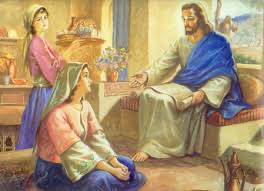
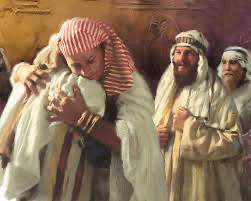







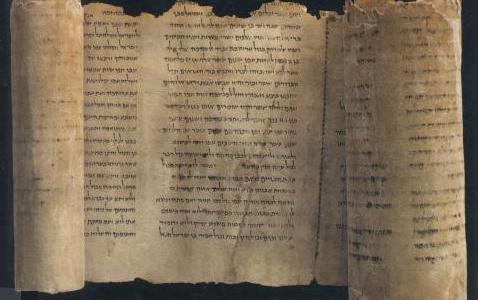
 Affirm Truth