Is the resurrection of Jesus Christ an historical event that really happened, or is it only a myth, as many atheists claim?
While no one witnessed the actual resurrection, many people swore they saw the risen Christ after his death, and their lives were never the same. Archaeological discoveries continue to support the Bible’s historical accuracy. We tend to forget that the Gospels and book of Acts are eyewitness accounts of the life, death and resurrection of Jesus Christ. Further nonbiblical evidence for Jesus’ existence comes from the writings of Flavius Josephus, Cornelius Tacitus, Lucian of Samosata, and the Jewish Sanhedrin.
The following seven clear proofs of the resurrection show that Christ did, indeed, rise from the dead.
The Resurrection Proof #1: The Empty Tomb of Jesus
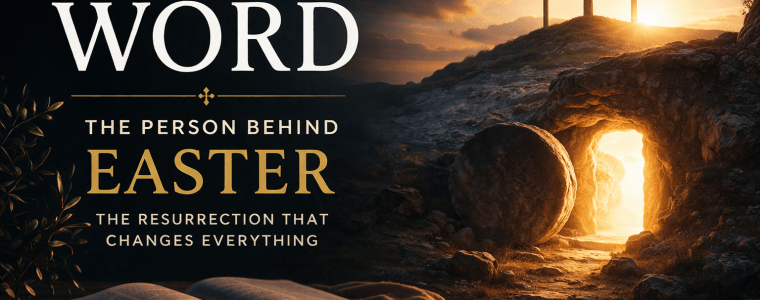
The empty tomb may be the strongest proof Jesus Christ rose from the dead. Two major theories have been advanced by unbelievers: someone stole Jesus’ body or the women and disciples went to the wrong tomb. The Jews and Romans had no motive to steal the body. Christ’s apostles were too cowardly and would have had to overcome the Roman guards. The women who found the tomb empty had earlier watched Jesus being laid away; they knew where the correct tomb was. Even if they had gone to the wrong tomb, the Sanhedrin could have produced the body from the right tomb to stop the resurrection stories. Jesus’ burial cloths were left neatly folded inside, hardly the act of hurrying grave robbers. Angels said Jesus had risen from the dead.
The Resurrection Proof #2: The Women Eyewitnesses
The women eyewitnesses are further proof that the Gospels are accurate historical records. If the accounts had been made up, no ancient author would have used women for witnesses to Christ’s resurrection. Women were considered second class citizens in Bible times; their testimony was not even allowed in court. Yet the Bible says the risen Christ first appeared to Mary Magdalene and other women. Even the apostles did not believe Mary when she told them the tomb was empty. Jesus, who always had special respect for these women, honored them as the first eyewitnesses to his resurrection. The male Gospel writers had no choice but to report this act of God’s favor, because that was how it happened.
The Resurrection Proof #3: Jesus’ Apostles‘
Apostles New-Found Courage After the crucifixion, Jesus’ apostles hid behind locked doors, terrified they would be executed next. But something changed them from cowards to bold preachers. Anyone who understands human character knows people do not change that much without some major influence. That influence was seeing their Master, bodily risen from the dead. Christ appeared to them in the locked room, on the shore of the Sea of Galilee, and on the Mount of Olives. After seeing Jesus alive, Peter and the others left the locked room and preached the risen Christ, unafraid of what would happen to them. They quit hiding because they knew the truth. They finally understood that Jesus is God incarnate, who saves people from sin.
The Resurrection Proof #4: Changed Lives of James and Others
Changed lives are yet another proof of the resurrection. James, the brother of Jesus, was openly skeptical that Jesus was the Messiah. Later James became a courageous leader of the Jerusalem church, even being stoned to death for his faith. Why? The Bible says the risen Christ appeared to him. What a shock to see your own brother, alive again, after you knew he was dead. James and the apostles were effective missionaries because people could tell these men had touched and seen the risen Christ. With such zealous eyewitnesses, the early church exploded in growth, spreading west from Jerusalem to Rome and beyond. For 2,000 years, encounters with the resurrected Jesus have changed lives.
The Resurrection Proof #5: Large Crowd of Eyewitnesses
A large crowd of more than 500 eyewitnesses saw the risen Jesus Christ at the same time. The Apostle Paul records this event in 1 Corinthians 15:6. He states that most of these men and women were still alive when he wrote this letter, about 55 A.D. Undoubtedly they told others about this miracle. Today, psychologists say it would be impossible for a large crowd of people to have had the same hallucination at once. Smaller groups also saw the risen Christ, such as the apostles, and Cleopas and his companion. They all saw the same thing, and in the case of the apostles, they touched Jesus and watched him eat food. The hallucination theory is further debunked because after the ascension of Jesus into heaven, sightings of him stopped.
The Resurrection Proof #6: Conversion of Paul
The conversion of Paul records the most drastically changed life in the Bible. As Saul of Tarsus, he was an aggressive persecutor of the early church. When the risen Christ appeared to Paul on the Damascus Road, Paul became Christianity’s most determined missionary. He endured five floggings, three beatings, three shipwrecks, a stoning, poverty, and years of ridicule. Finally the Roman emperor Nero had Paul beheaded because the apostle refused to deny his faith in Jesus. What could make a person willingly accept—even welcome—such hardships? Christians believe the conversion of Paul came about because he encountered Jesus Christ who had risen from the dead.
The Resurrection Proof #7: They Died for Jesus
Countless people have died for Jesus, absolutely certain that the resurrection of Christ is an historical fact. Tradition says ten of the original apostles died as martyrs for Christ, as did the Apostle Paul. Hundreds, perhaps thousands of early Christians died in the Roman arena and in prisons for their faith. Down through the centuries, thousands more have died for Jesus because they believed the resurrection is true. Even today, people suffer persecution because they have faith that Christ rose from the dead. An isolated group may give up their lives for a cult leader, but Christian martyrs have died in many lands, for nearly 2,000 years, believing Jesus conquered death to give them eternal life.

 Affirm Truth